Drive Montenegro
Transfer and tour booking site for a Montenegrin taxi firm, with the dispatch panel, the Telegram driver bot and the partner portal listeners the office runs on.
Web
- Type
- Website
- Year
- 2026
- Client
- Drive Montenegro
Screenshots
Admin panel
The side only the team sees: where Drive Montenegro is run day to day.
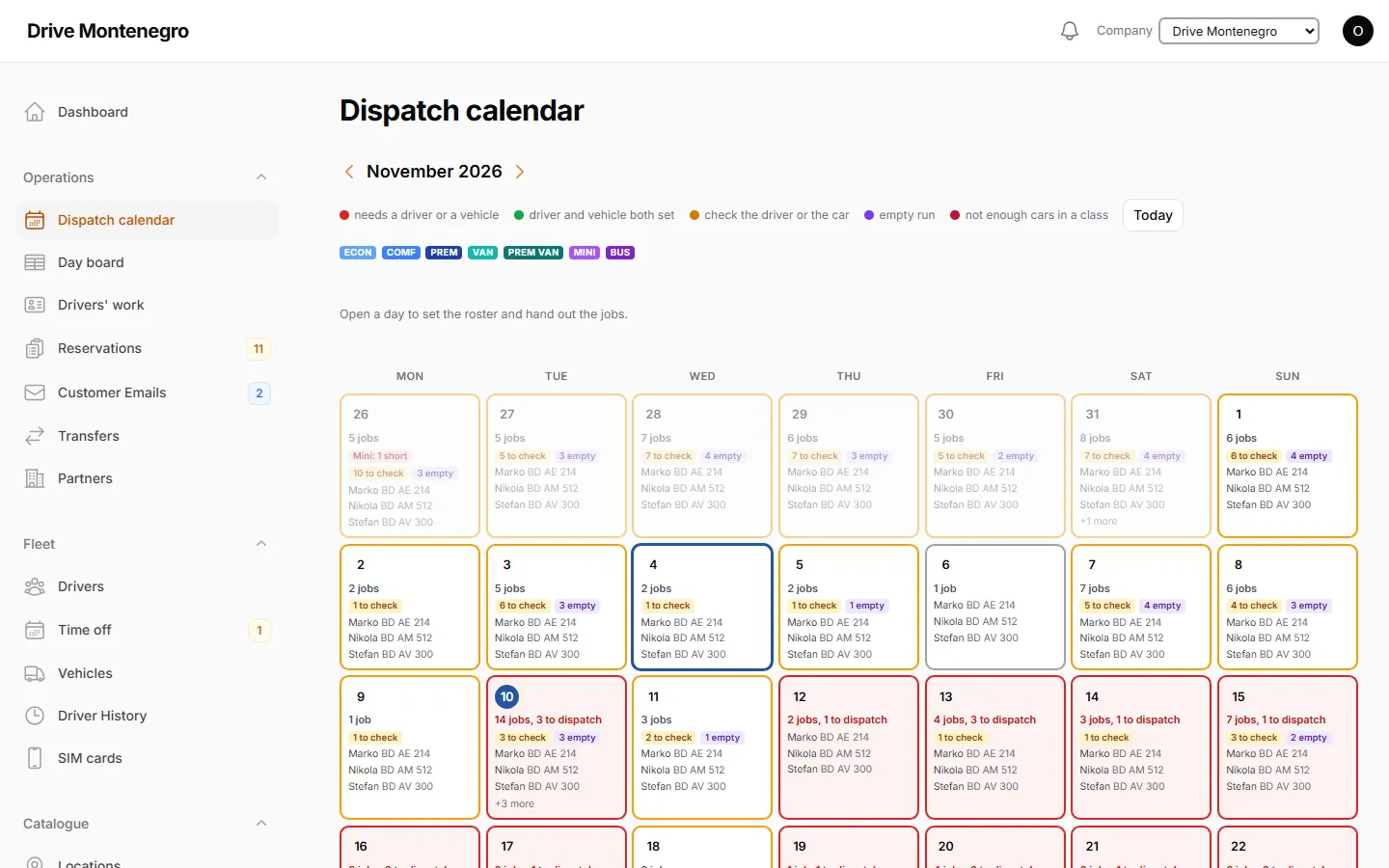
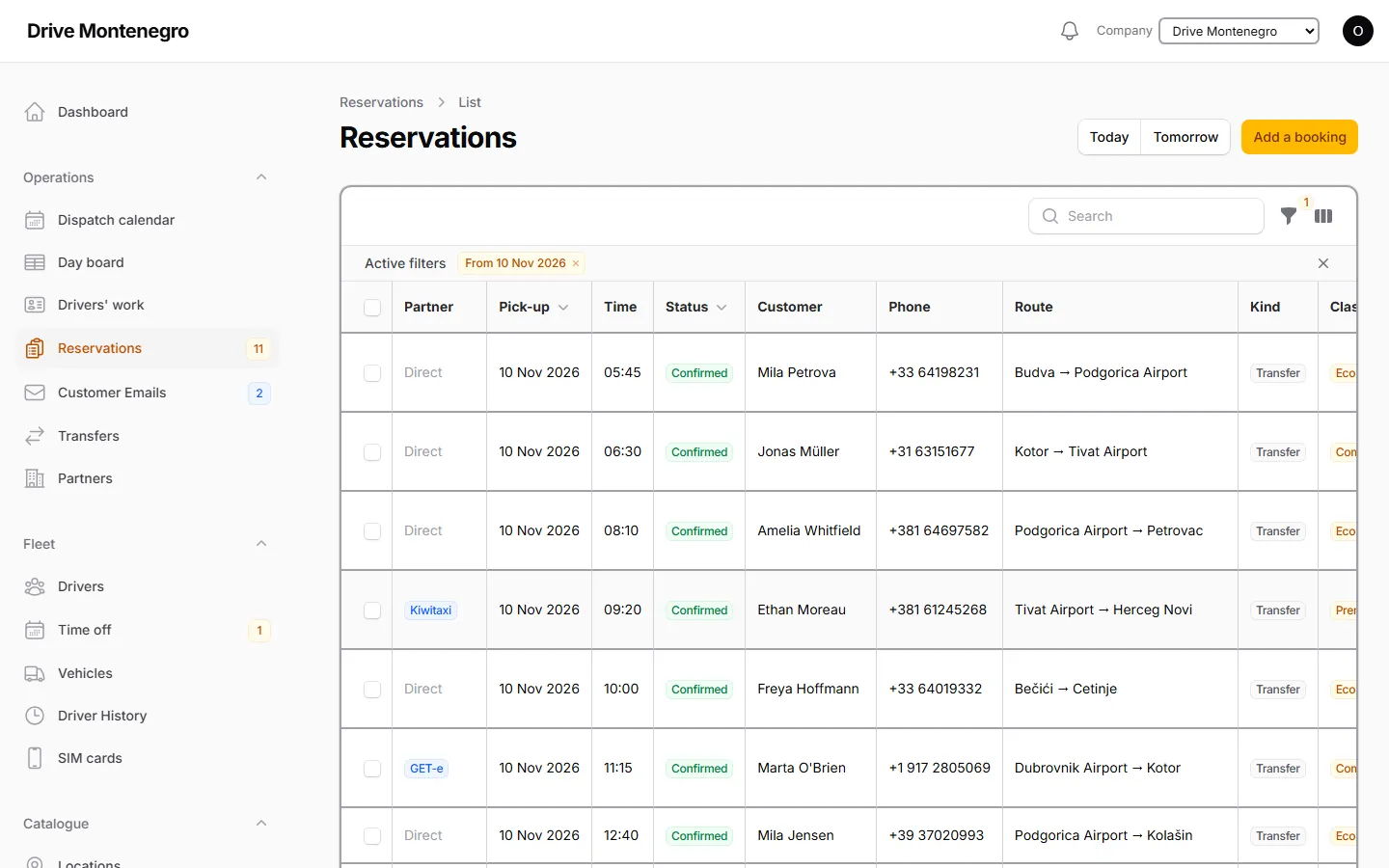
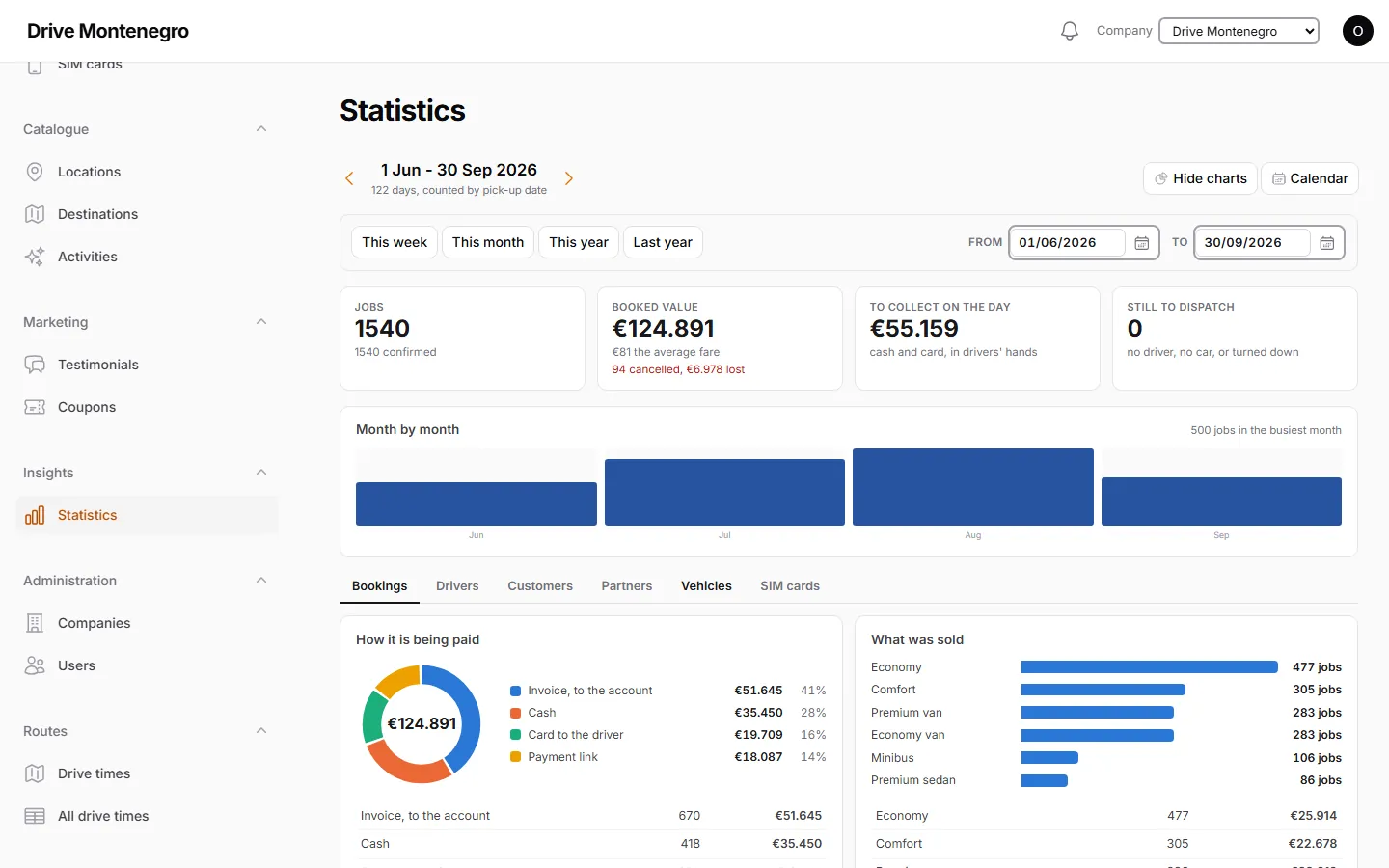
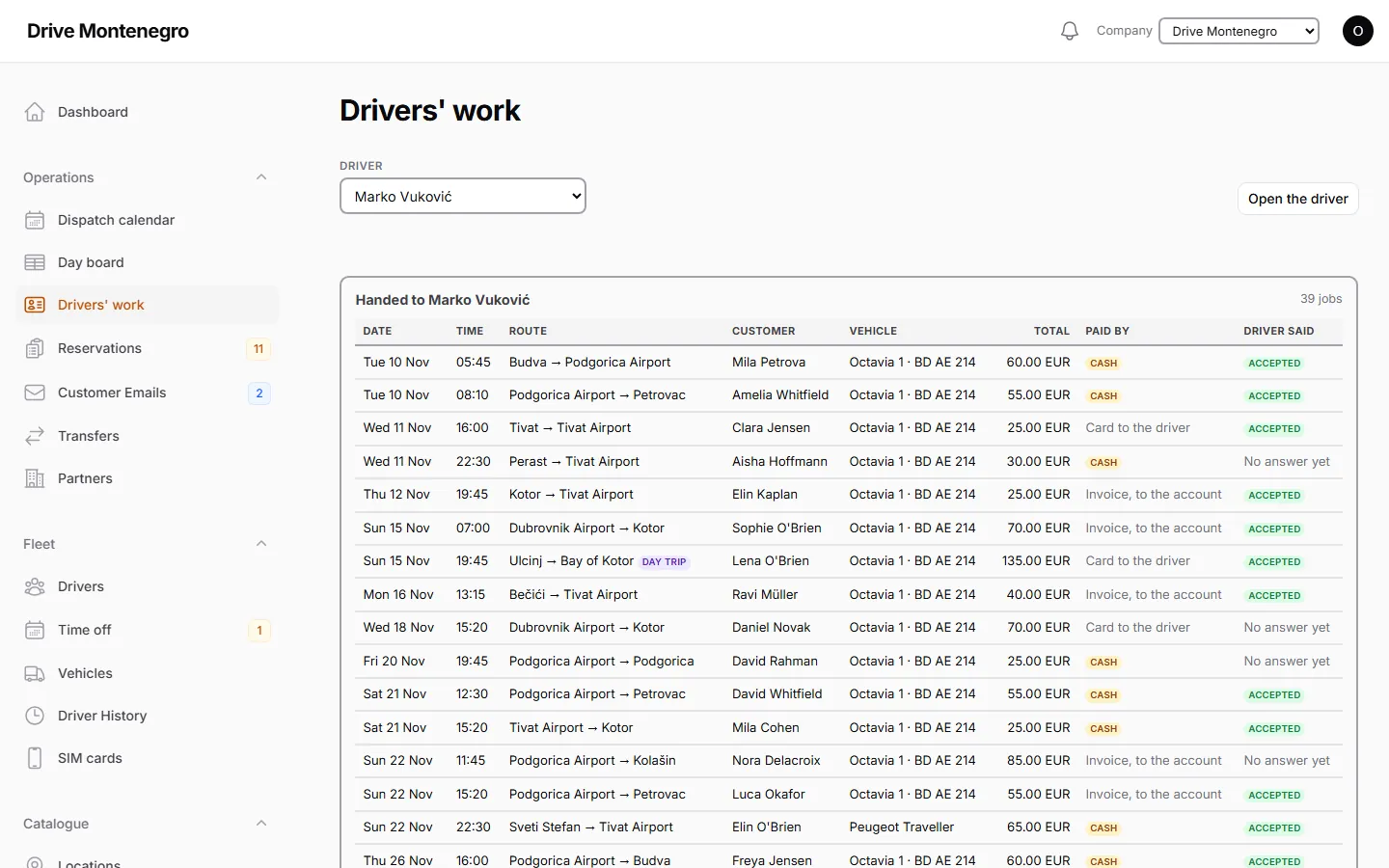
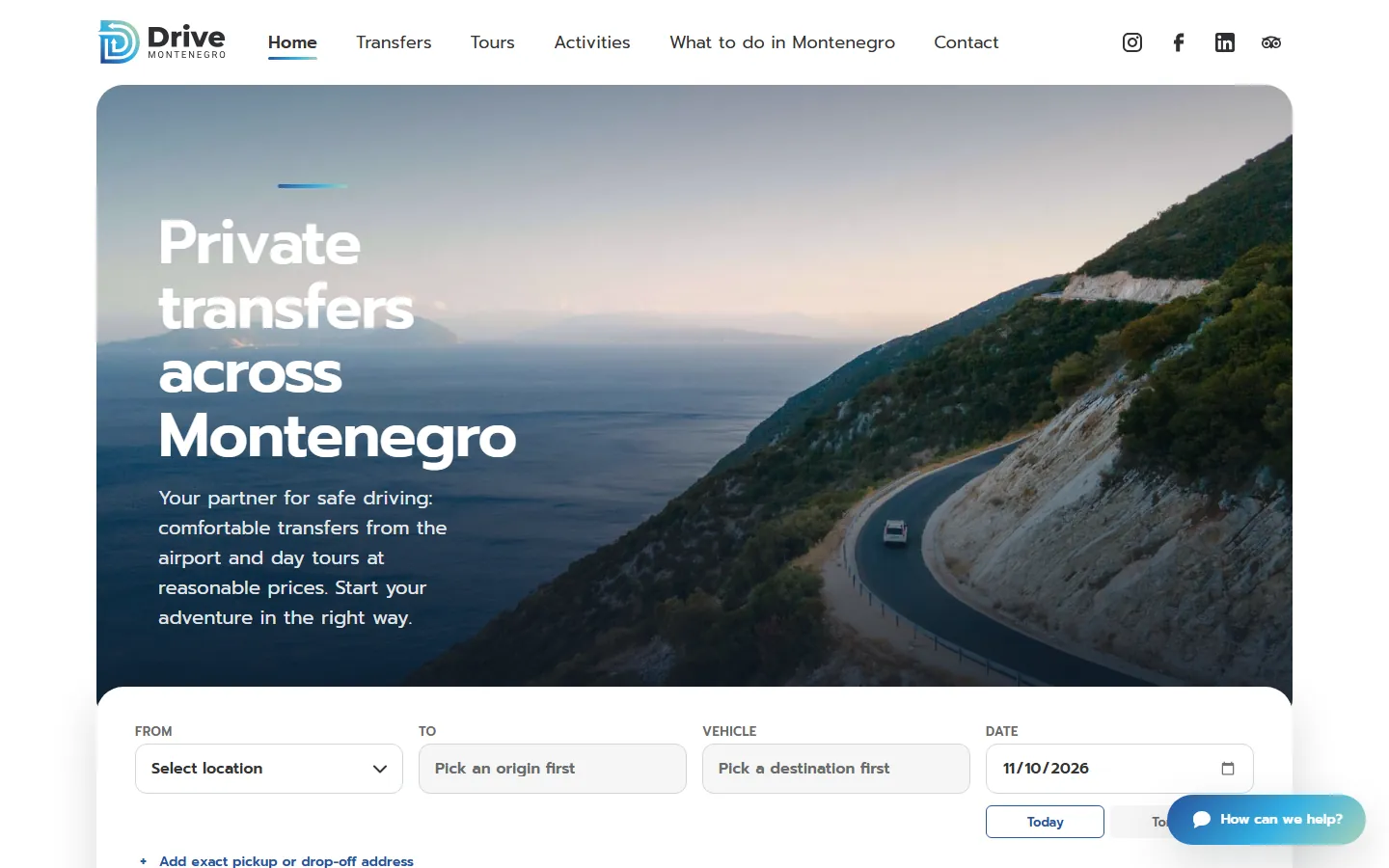
Drive Montenegro drives airport transfers and day tours across Montenegro. I took over their old Laravel 8 and Vue site, rebuilt the public side, and built everything the office now runs the whole day from: the dispatch panel, a Telegram bot for the drivers, and listeners that take rides from partner portals on their own.
The website
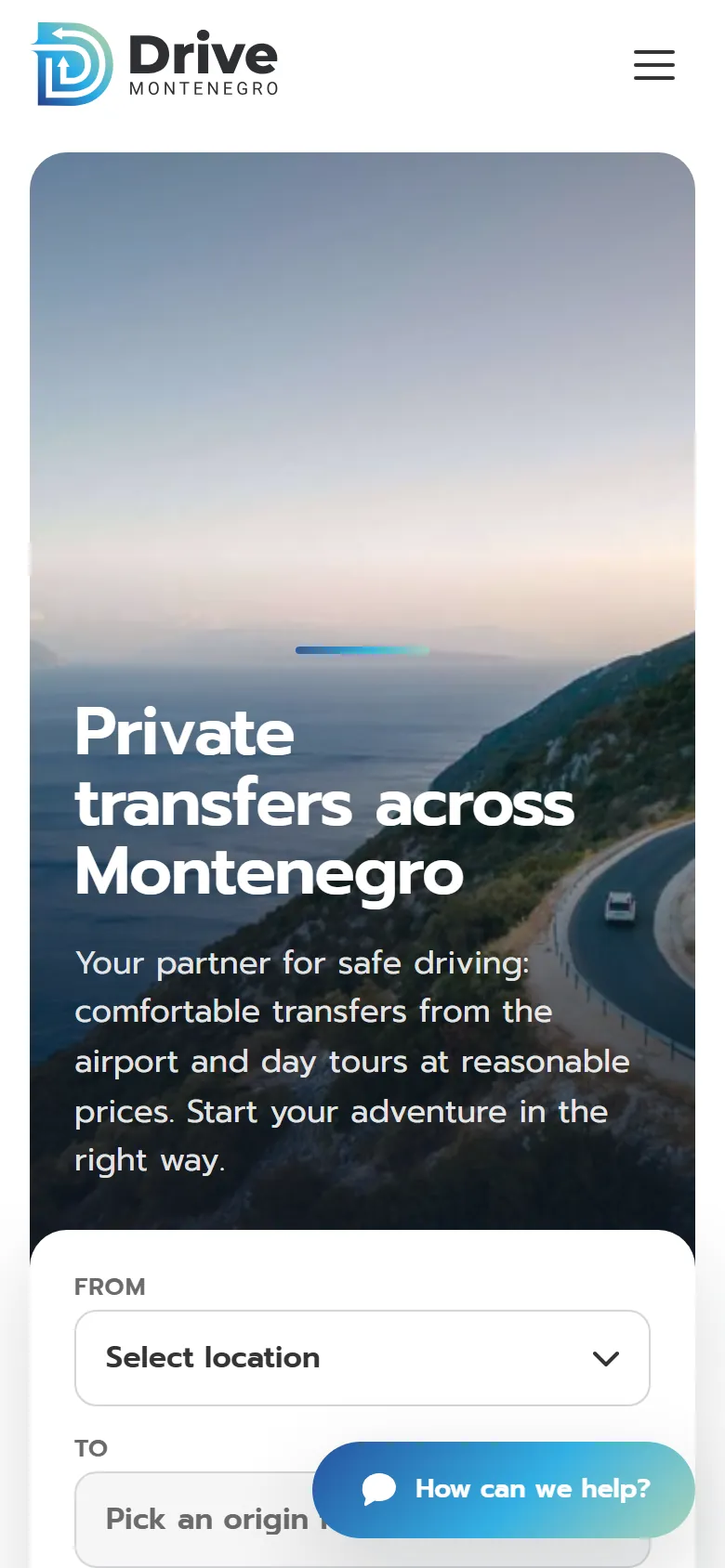
- The route on a map: pick where you start and where you are going, and the photo at the top turns into a map with the road drawn in, and the tours and activities along the way pinned on it.
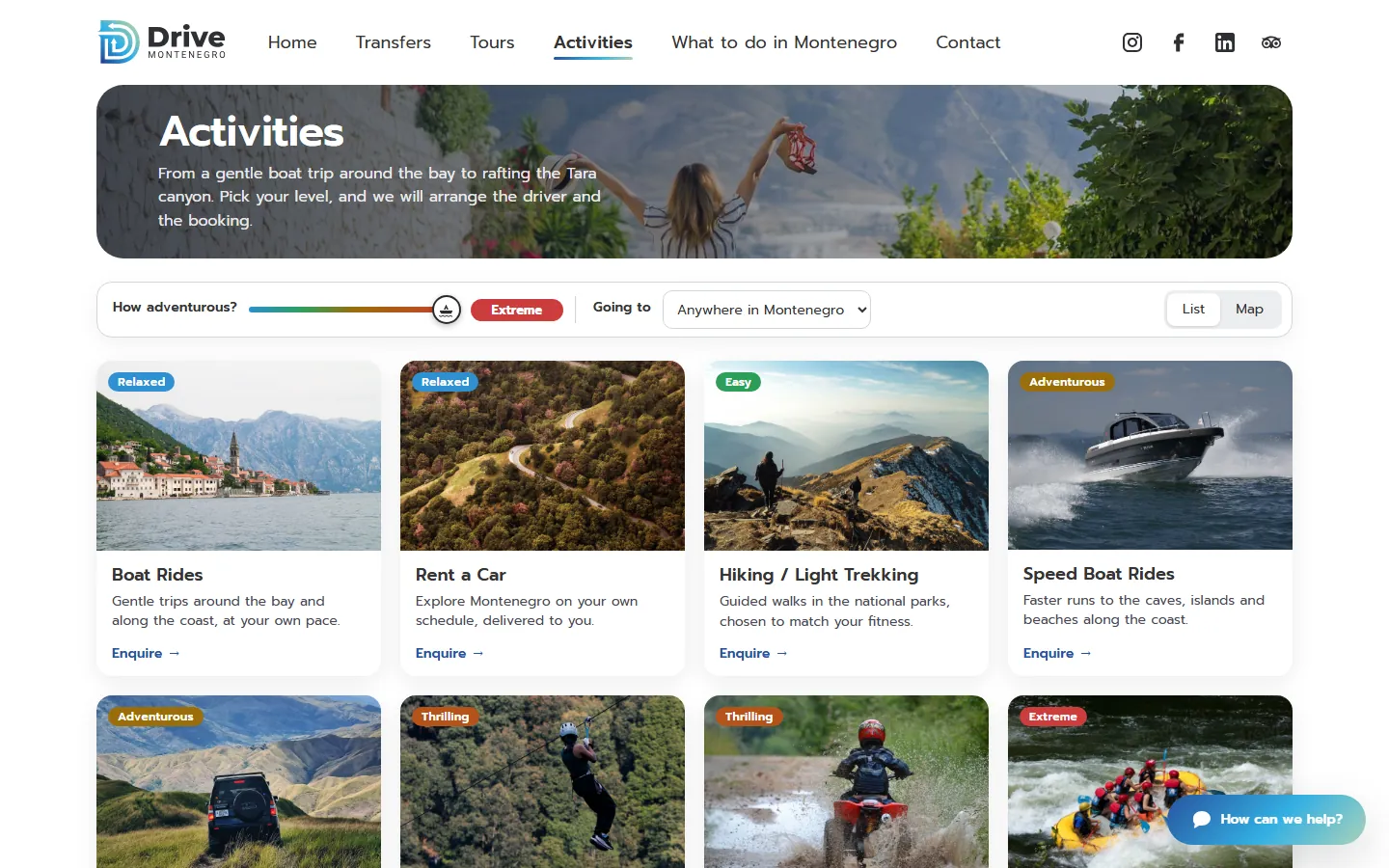
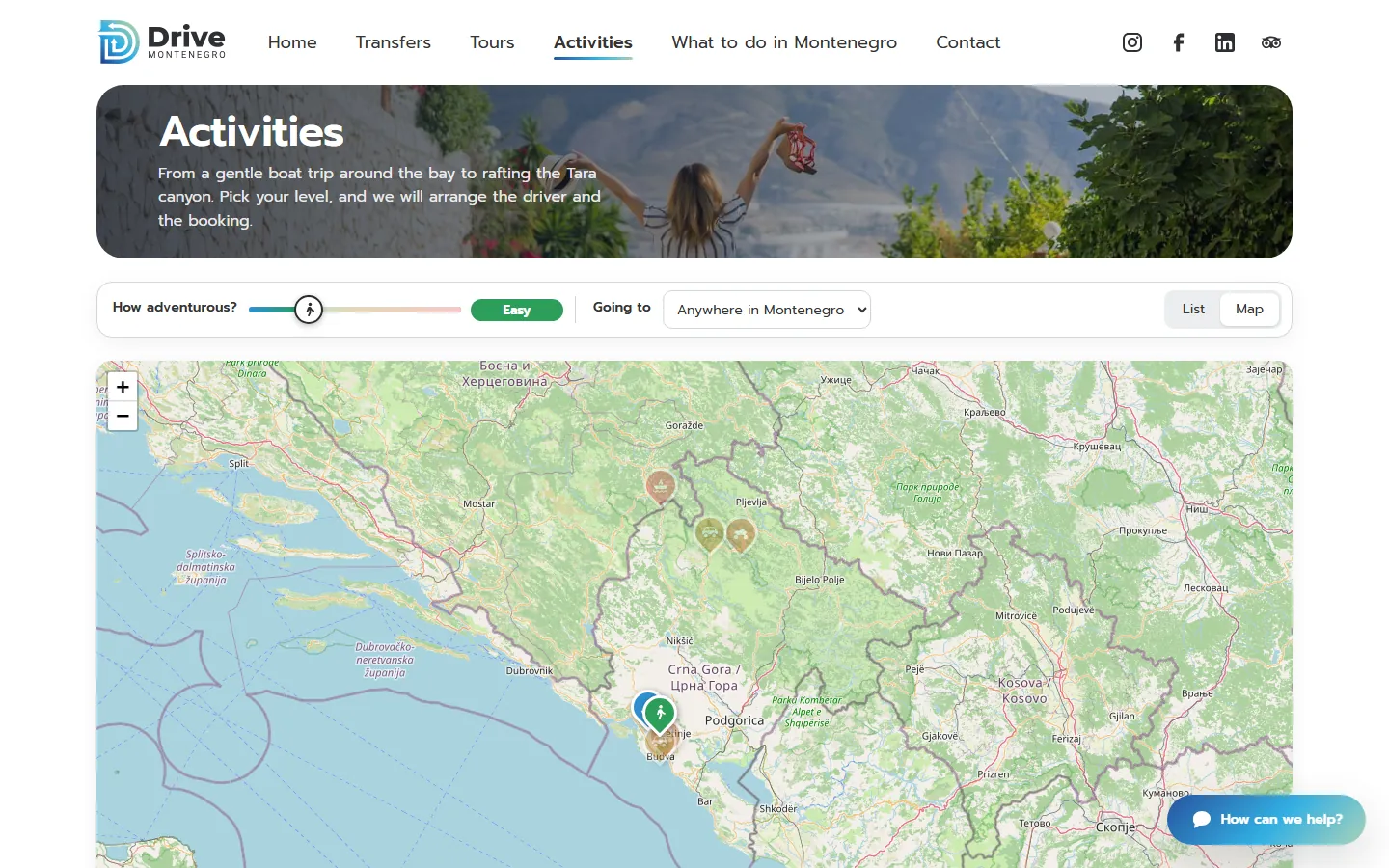
- Activities by how adventurous you feel: a slider from relaxed to extreme, with a car that changes with the level, and a town picker that dims what is far away. The same list is also a map.
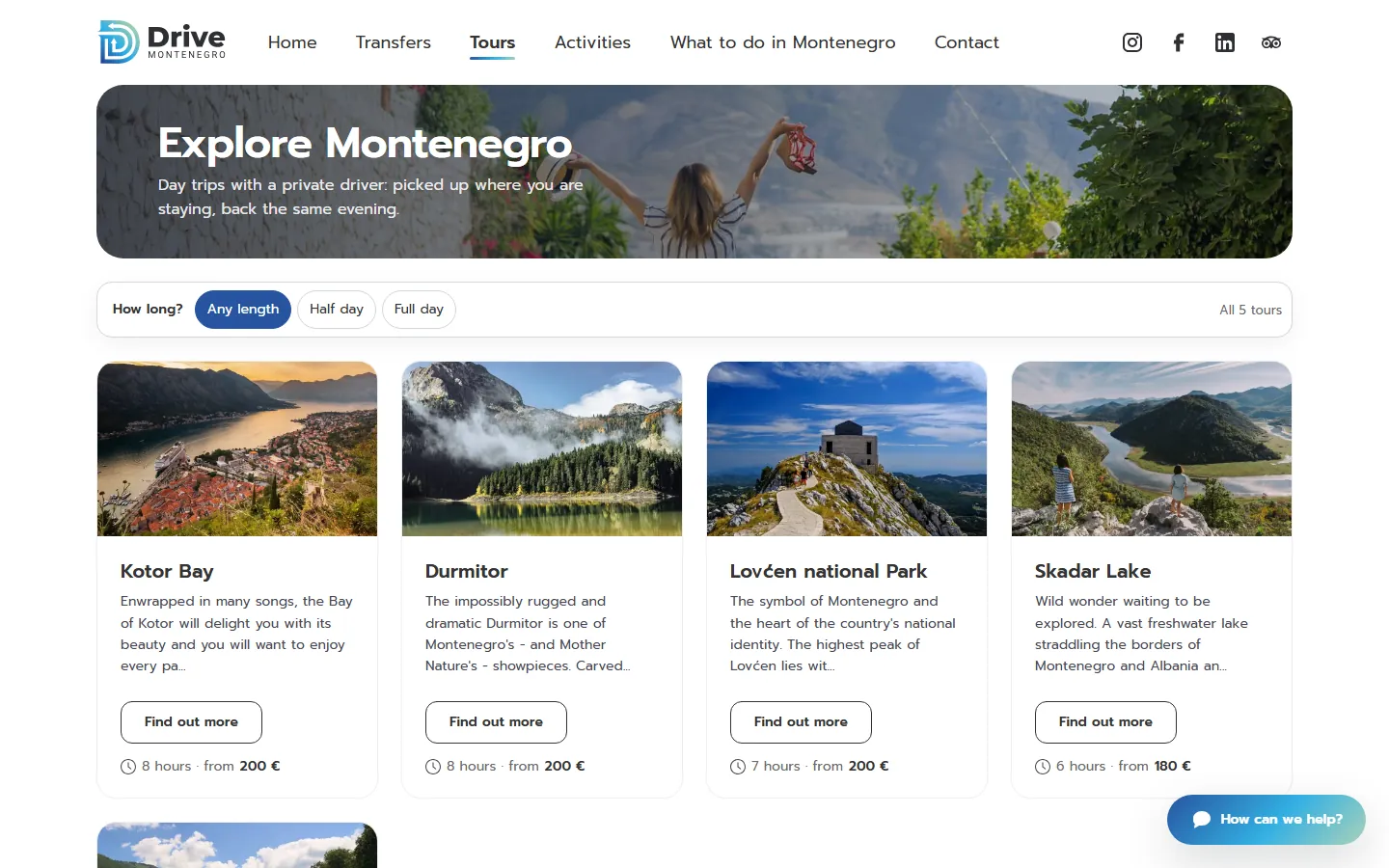
- Tours and a page for every route: day trips by length, and a page for every transfer route, place and activity, each with the booking form filled in, all rendered on the server for search engines. The old Vue addresses redirect to the new pages.
- Booking that answers back: the price and the coupon show before you book, times are picked on a 24-hour clock face, and every customer gets a link to move or cancel their own booking. The driver hears about the change on Telegram. Emails carry the logo and a photo of the car, and replies land in the panel.
- A guided chat that answers questions about places, tours, activities and cars, and works out a price as you go.
The dispatch panel
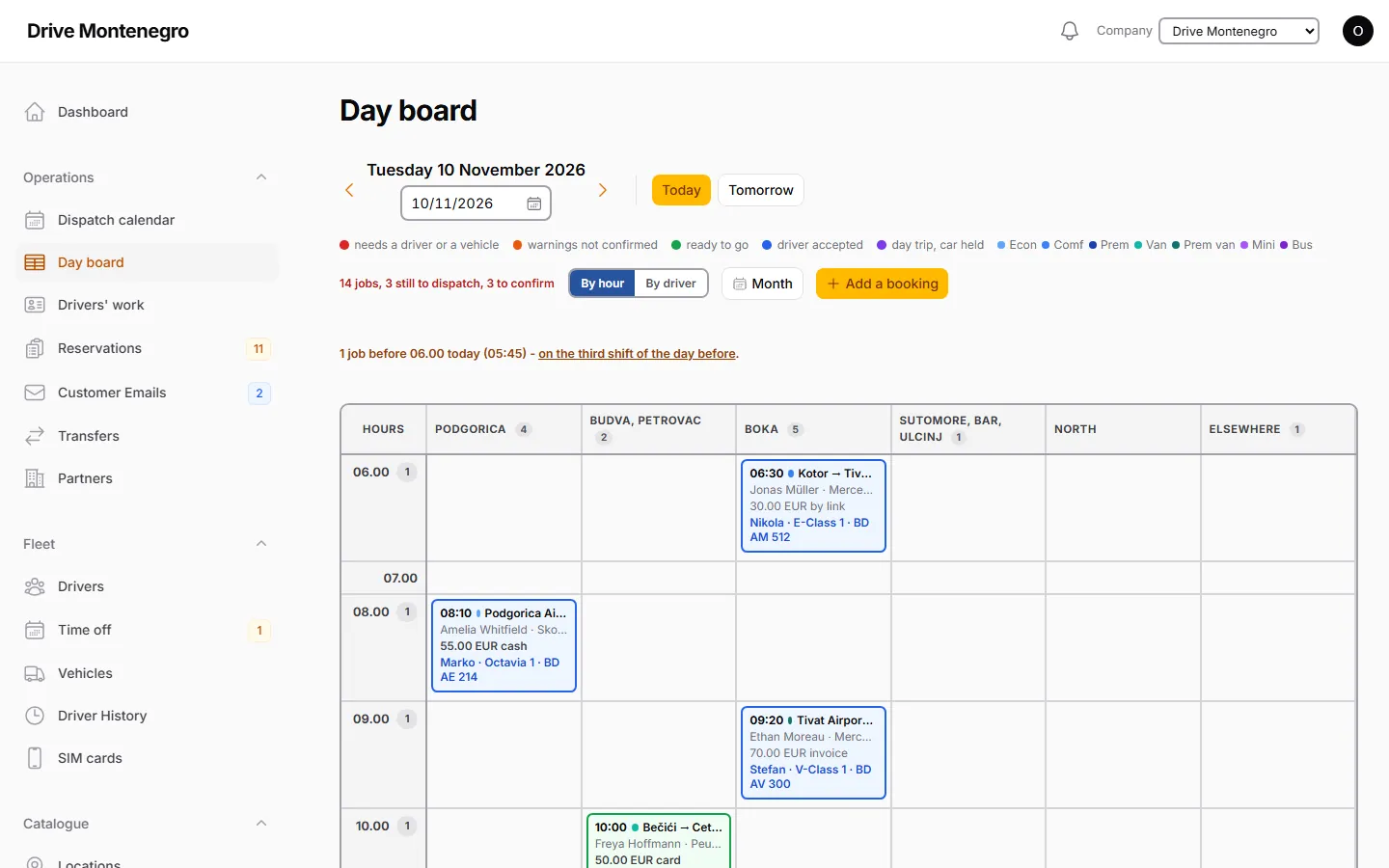
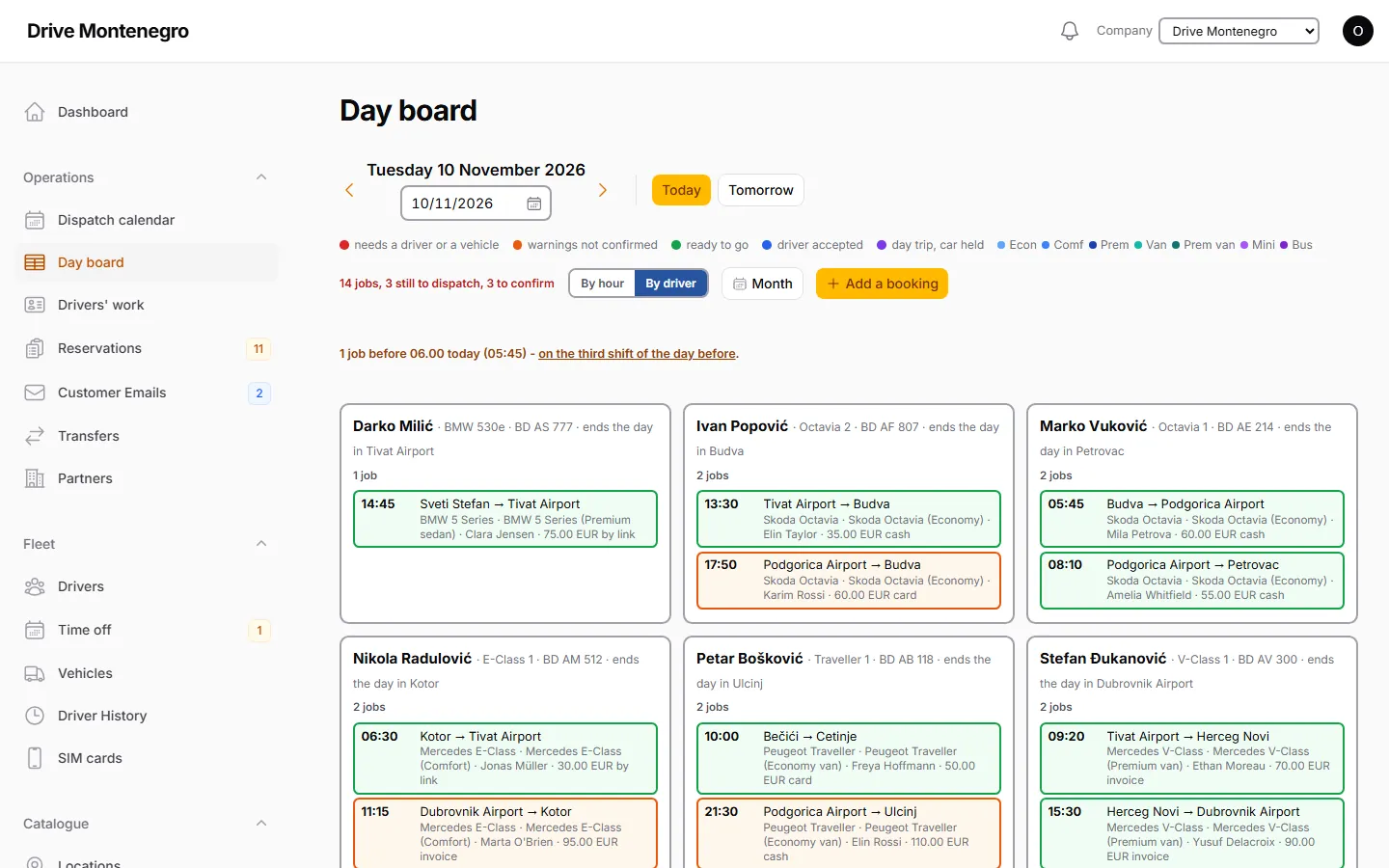
- Day board and calendar: the day by hour and region or by driver, with a separate night grid, and the month with the roster on every day. Each job is red until it has a driver and a car, orange while a warning is unconfirmed and green when ready. The board flags a driver who is not rostered, a car too small for the group, two jobs at once and empty runs, and lists which cars are still free.
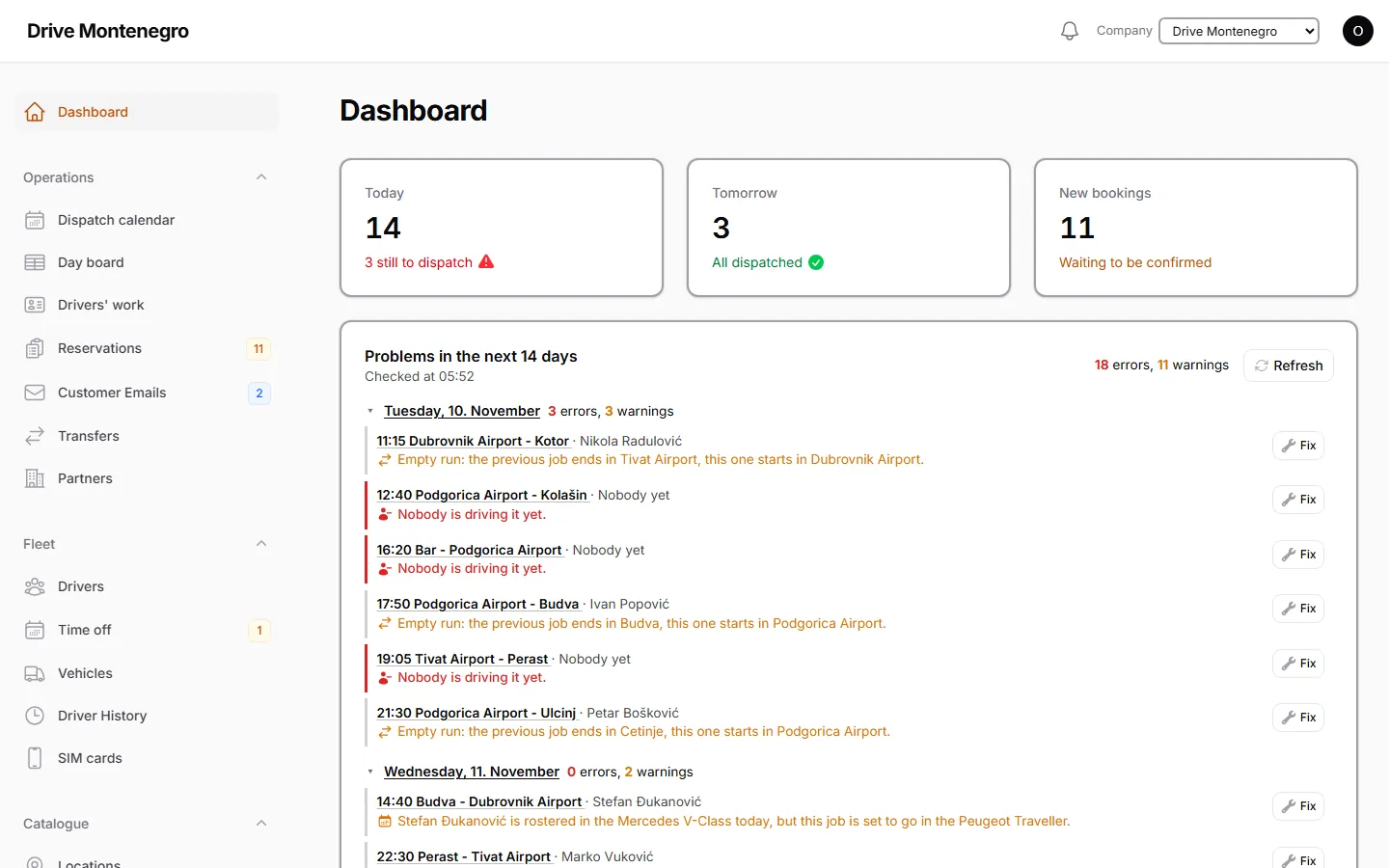
- Problems ahead: the dashboard scans the next two weeks for everything wrong, from rides nobody is driving to a driver on time off or a car booked while it is in the workshop, each with a button to fix it.
- Bookings: transfers and day trips with the customer, price, coupon, payment, the partner it came from and the partner it was passed on to. The office can send a customer link, ask the customer for a missing flight or address by email, and see every answer the driver gave on Telegram.
- Read from a screenshot: drop up to five screenshots of a partner's booking page or email, and Gemini fills in the new booking. It warns when that partner order is already booked, and a busy Gemini is retried in the background.
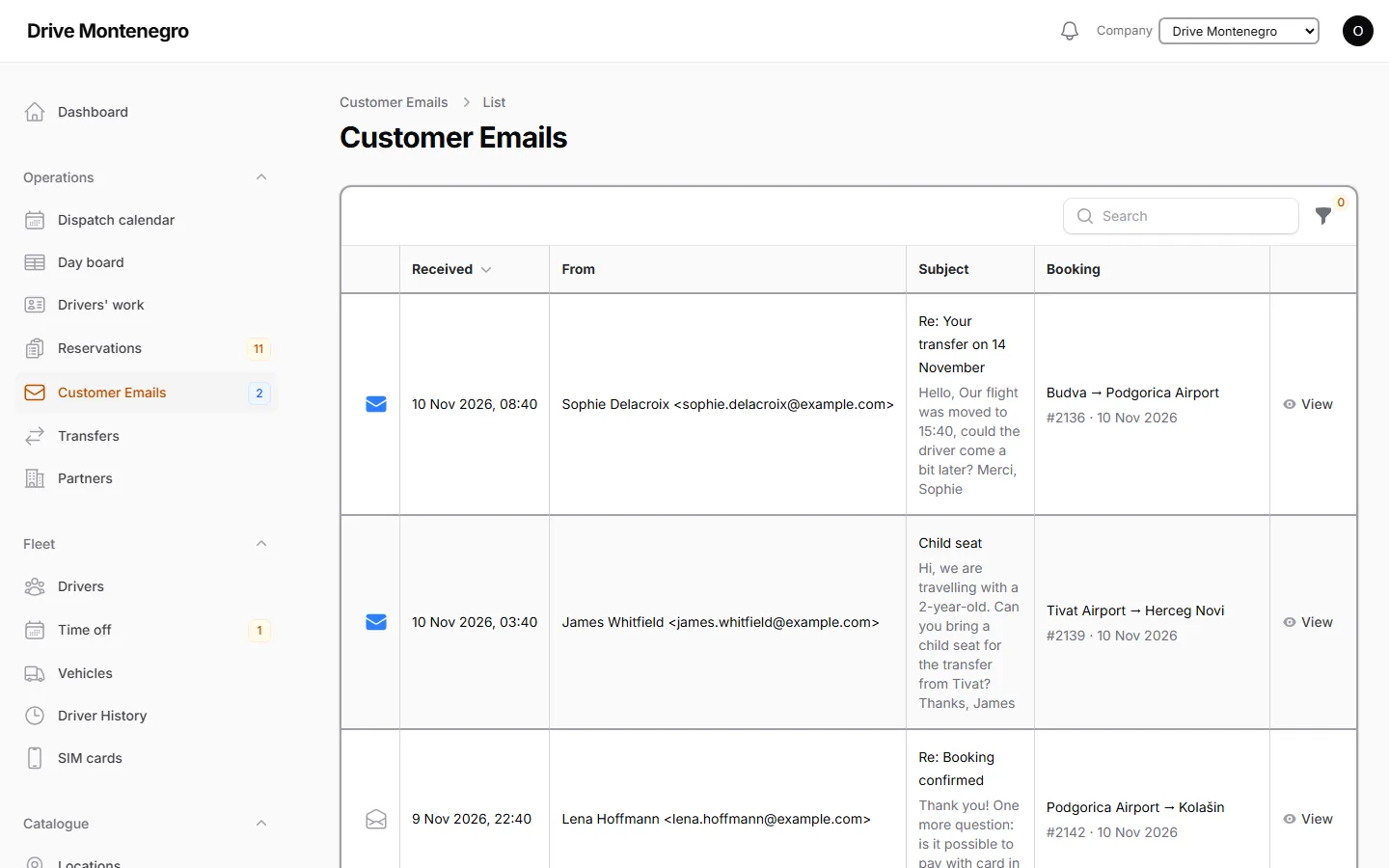
- Customer inbox: every booking email has its own reply address, so a customer's answer is filed under the right booking, attachments included. A spam filter keeps customers out of spam, learns from the office and checks how the mail was sent.
- Fleet and routes: the classes sold (sedans, vans, minibuses, buses), each real car with its plate and its days in the workshop, the price of every route by class, and the drive time between every pair of places, read from the map and corrected by hand where the office knows better.
- The bell: the office hears at once about a booking with no driver, a driver turning a job down, a partner or customer changing or cancelling a ride, a new customer email and a time off request, with a button to open the booking or the day.
- Several firms in one panel: each group sees its own drivers, cars, partners, logins and books, can lend drivers and cars to another group, and the owner can look at the panel as any group. Roles decide who sees the books, the scrapers, the coupons and the inbox.
- On record: every change to a booking, driver, car or partner records who made it, the old and new value, and whether it came from the panel, Telegram, the customer or an importer. The panel speaks Montenegrin and English.
Drivers on Telegram
- Jobs with one tap: a new job arrives as a short briefing with the route, class, flight, amount to collect and the customer's phone ready to tap, with Accept and Decline buttons. A decline rings the office straight away. Changes, cancellations and taking a driver off a job are sent too, with a button to say it was seen.
- The driver's menu: upcoming jobs by day and jobs driven this month, SIM cards sold, the weekly schedule, and time off. Time off is asked for with Today, Tomorrow and Day after buttons or in plain words, from single days to ranges and part days, waits for the office to approve it and can be withdrawn.
- SIM card sales from a photo: the driver sends a photo of the SIM pack and the bot reads the number off its label with Tesseract, turning and cleaning up the photo first. It refuses photos with several packs and catches cards already recorded. The office imports the operator's monthly activation list to confirm sales, and drivers are told which of their cards were confirmed.
- Linking a driver takes a one-time link from the panel. The panel warns the owner if Telegram is sending the bot's messages anywhere else.
Partner portal listeners
- Four portals: Kiwitaxi, GET-e, myTravel and Welcome Pickups. Each listener logs into the portal with the group's own account, keeps its session, and checks for new rides about every 20 seconds, day and night.
- Taking the rides worth taking: an offer is accepted when it pays at least the office's price for that route and class, converted from other currencies at ECB rates. Offers the office should decide on, such as short notice, limousines or extra services, are left for a person.
- The office's rules: pause for a few hours, quiet hours to look but not accept, night hours that refuse rides still on the road in that window (the drop-off time comes from the drive times), days off on a month grid, minimum notice per portal, and first-come market offers on or off.
- Straight into bookings: a taken ride becomes a booking invoiced to the partner, or is matched to the booking the office already typed in. When the partner changes or cancels it, the booking follows and the office is told, but the driver, car and office notes are never overwritten.
- Every offer on record: the panel lists each offer a listener saw, what it did and why, and turns a missed route into a new price in one click.
- No browser needed: the listeners talk to the portals over plain HTTP, each in its own container.
The books
- Drivers: pay as a share of each job or a flat amount per job, with bonuses, tips and fuel, paid out every two weeks, and the cash each driver collects against what they hand in each month.
- Partners: a ledger of rides driven for each partner and by them, settled by month, with a printable monthly statement.
- Between firms: who drove for whom today and the month's balance between the groups.
- Cars: services, repairs, tyres and insurance for every car, with the odometer.
- Statistics for any stretch of days: booked value, cash and card to collect, classes sold, busiest routes, drivers and their answers, returning customers, partners, coupons, how much each car was driven and what it cost.
Built with Laravel 12, Filament 5 and Livewire 4 on MariaDB, with Leaflet maps, drive times from OSRM and email through Resend. It runs in Docker on its own server, with about 750 tests run in CI. The panel screenshots come from a local copy filled with made-up demo bookings, so no real customer is shown.